LET'S PLAY!
Charts to Understand Connections Between Chords
The proposal is simple: play with the diagrams following the arrows, finding ideas for your own songs and learning music theory.

I'm a Visual Person..
I realized that many of us need to see information visually. However, there is very little music theory literature that explains complex chord modulations and progressions with shapes, arrows, and colors.
In these books, ways are presented to—literally—see harmony and, on every page, creative and visual composition is encouraged.
Easy to Understand
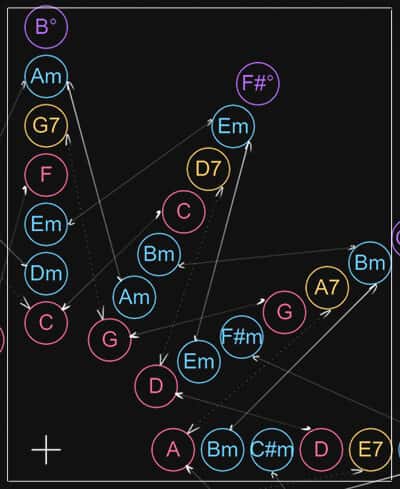

Permanent Modulation
First Book
152 pages

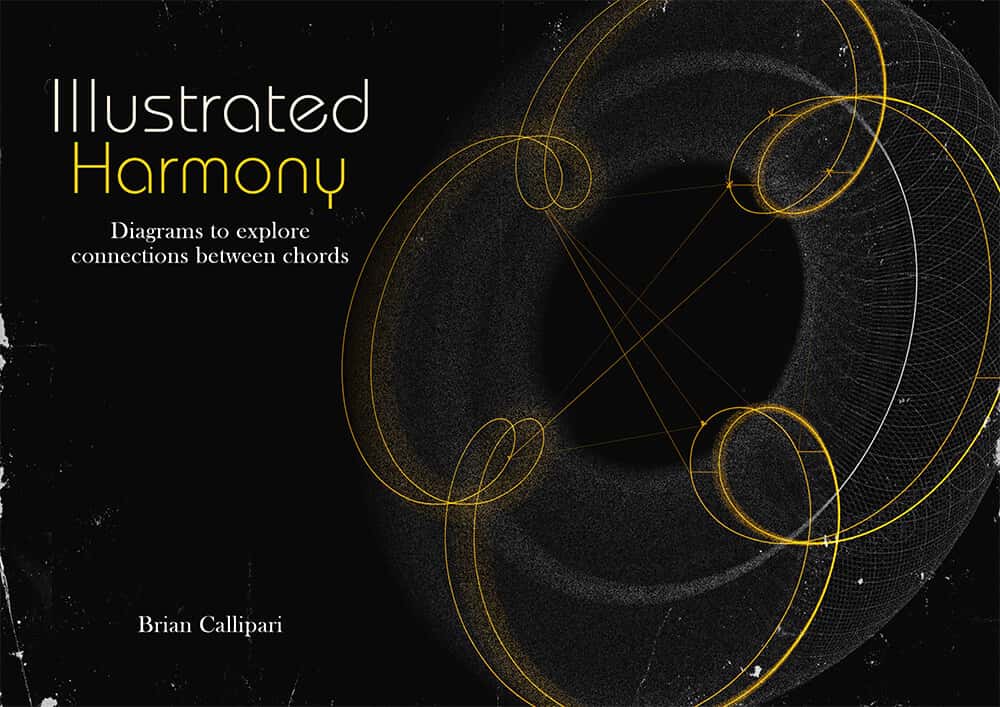
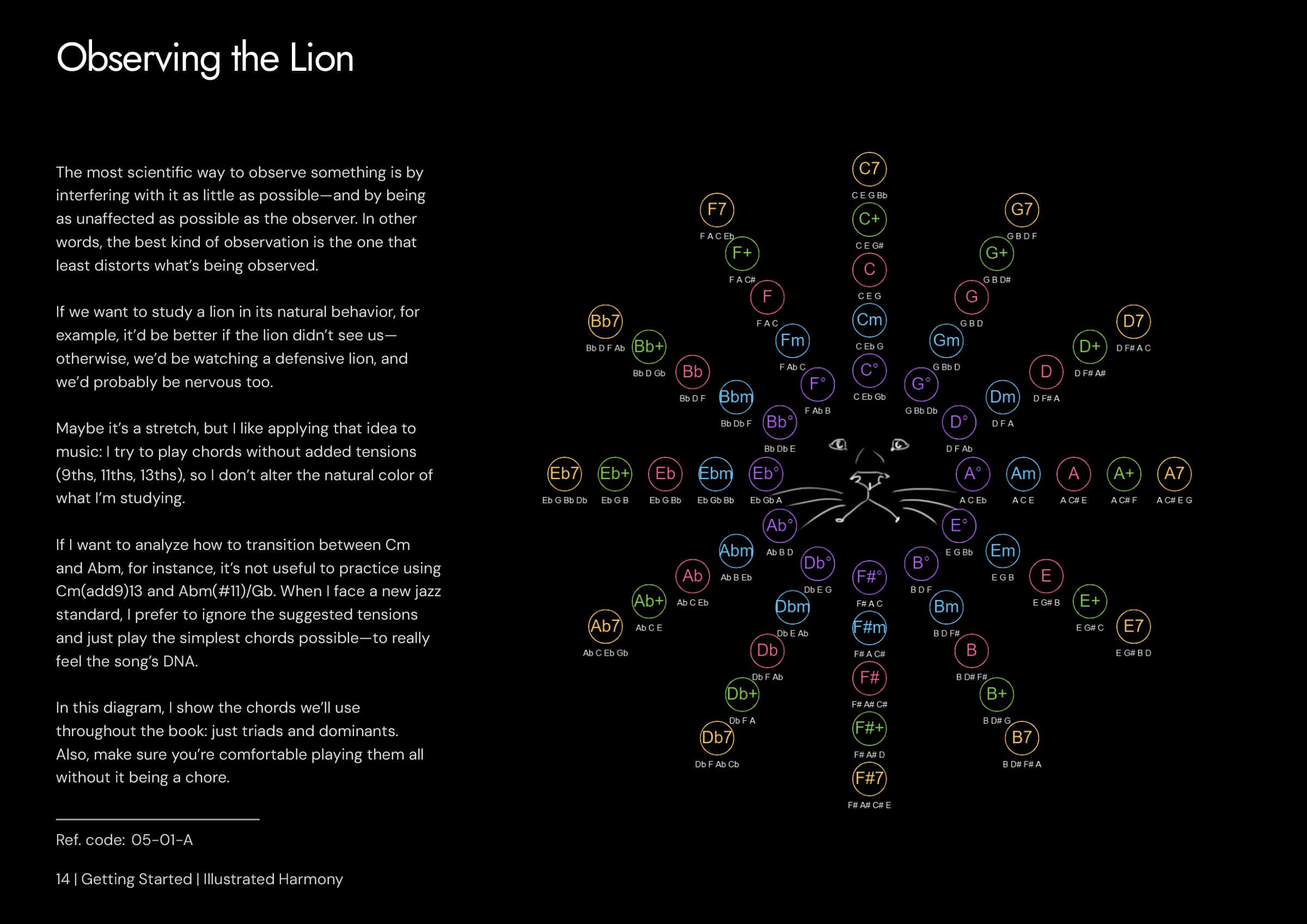
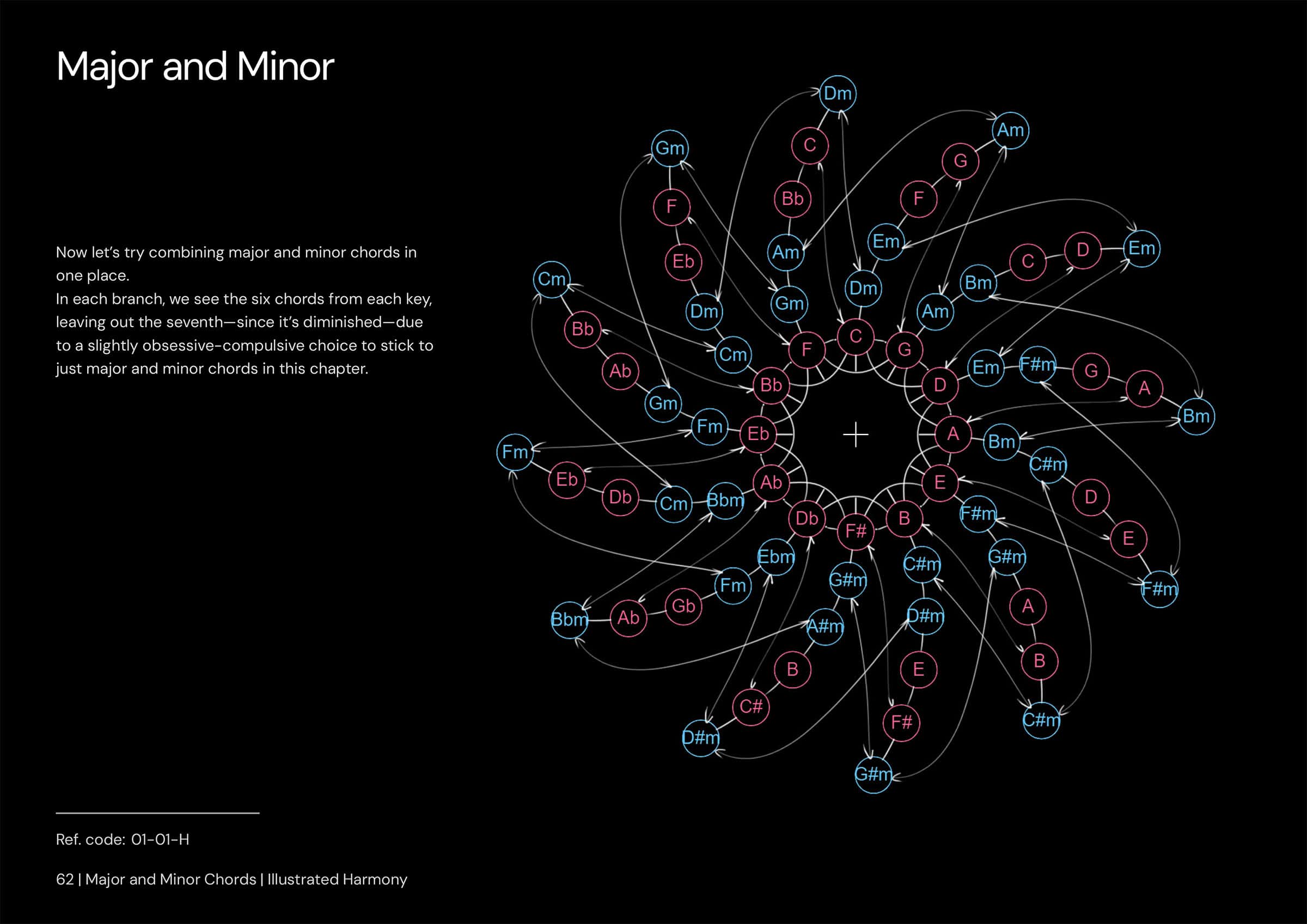
Illustrated Harmony is a visual guide to exploring musical harmony with a playful, free, and creative approach. Through colorful graphics, the book invites you to let go of rigid tonal concepts and discover paths that would be hard to imagine without the diagrams. It's not an academic manual—it's a tool to enjoy music, spark ideas for songwriting, and get lost (or found) in harmonic labyrinths. It includes explanations of music theory, philosophical reflections, and prompts to keep playing and learning on your own. It doesn't include sheet music—only chord symbols. If you can play major, minor, diminished, and augmented chords, and follow arrows… this book is for you.
Second Book
190 pages
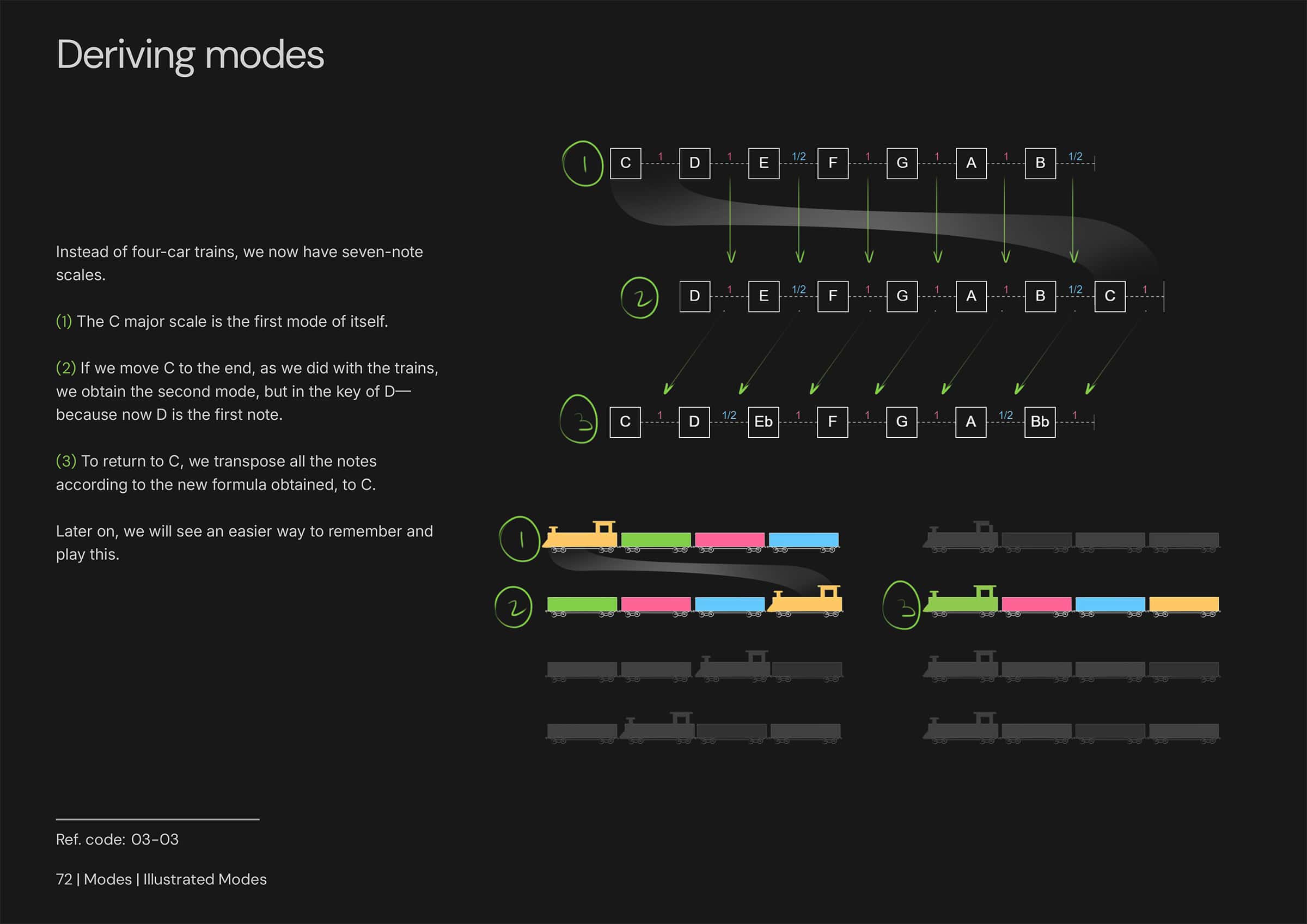
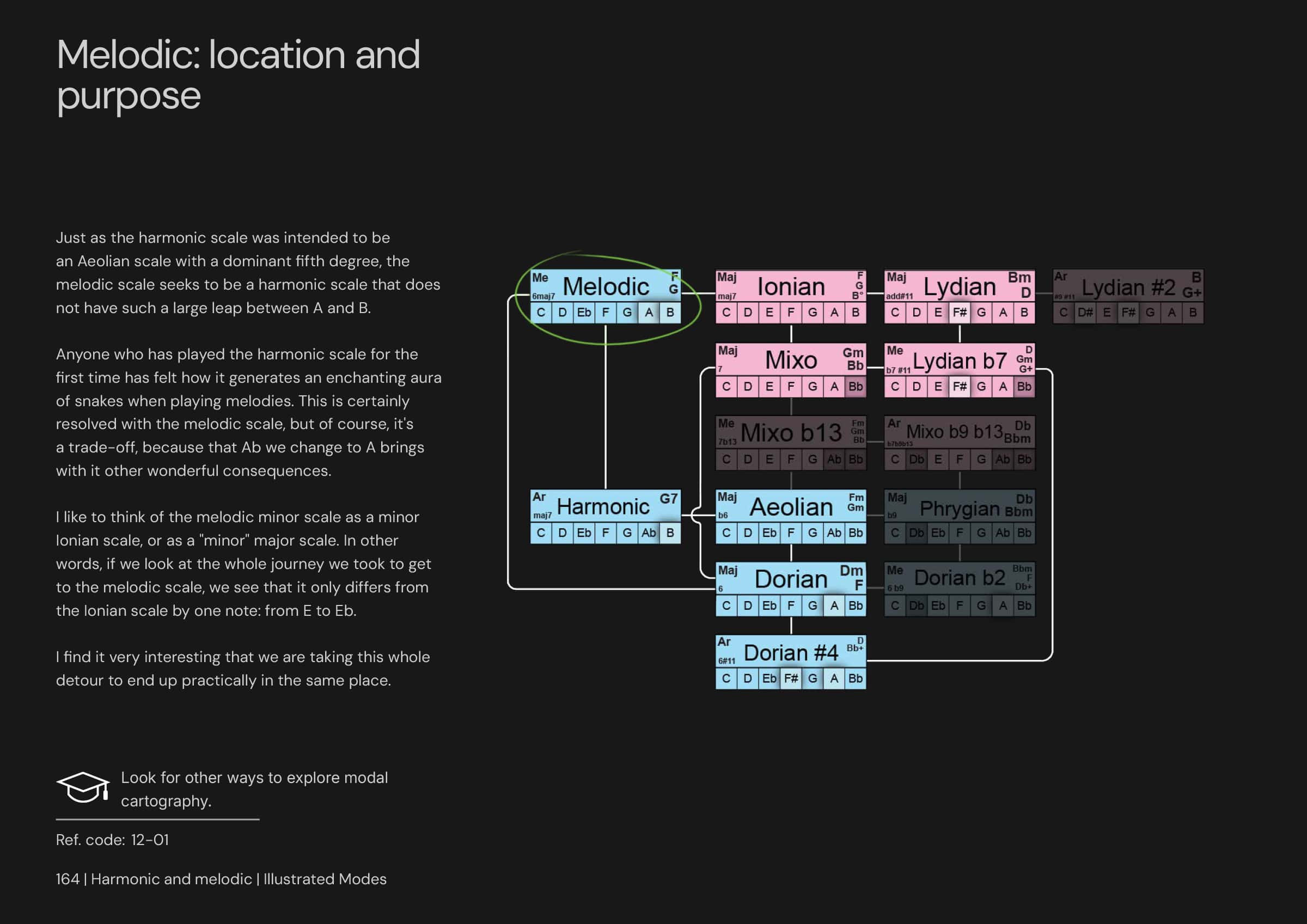
Illustrated Modes is a practical and visual guide to understanding and applying the Greek modes. Across its 190 pages, it offers a progressive journey: from building a scale note by note, through harmonization and the essential musical theory, to the exploration of fourteen modes, showing how to modulate between them and even create new scales. With clear and colorful graphics, the book teaches how to organize theory intuitively, making it easier for each reader to continue learning independently. The examples are presented in exclusive animated videos with realistic orchestral sounds, accompanied by step-by-step explanations of why they work. It also includes numerous tasks and practical exercises that invite active experimentation with each concept, as well as a philosophical background that encourages further personal study. The book contains no standard notation: everything is expressed through chord symbols (C, Fm, Bb, etc.), and the compositions are animated, making it accessible and useful for musicians of all levels.
Third Book
218 pages
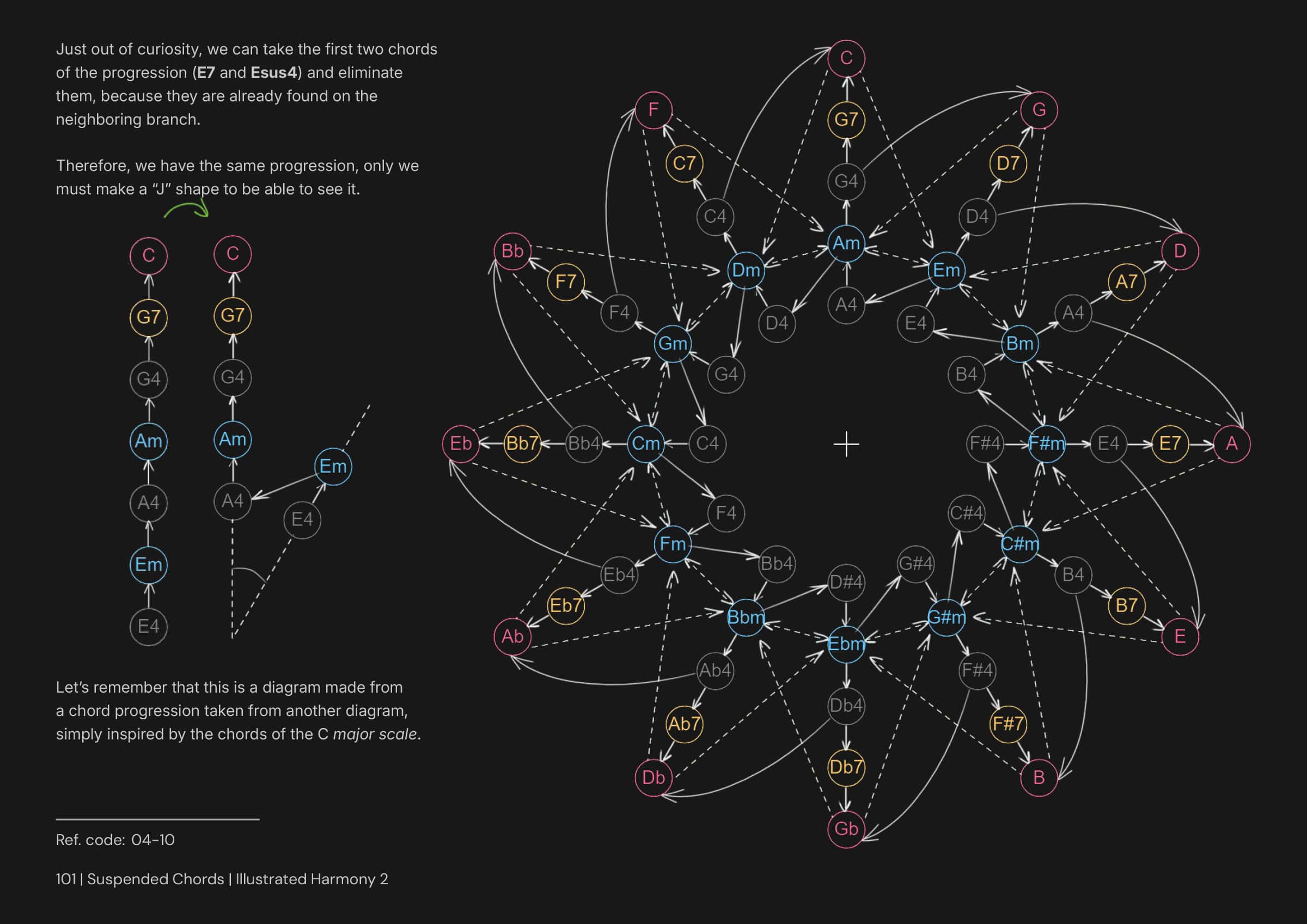
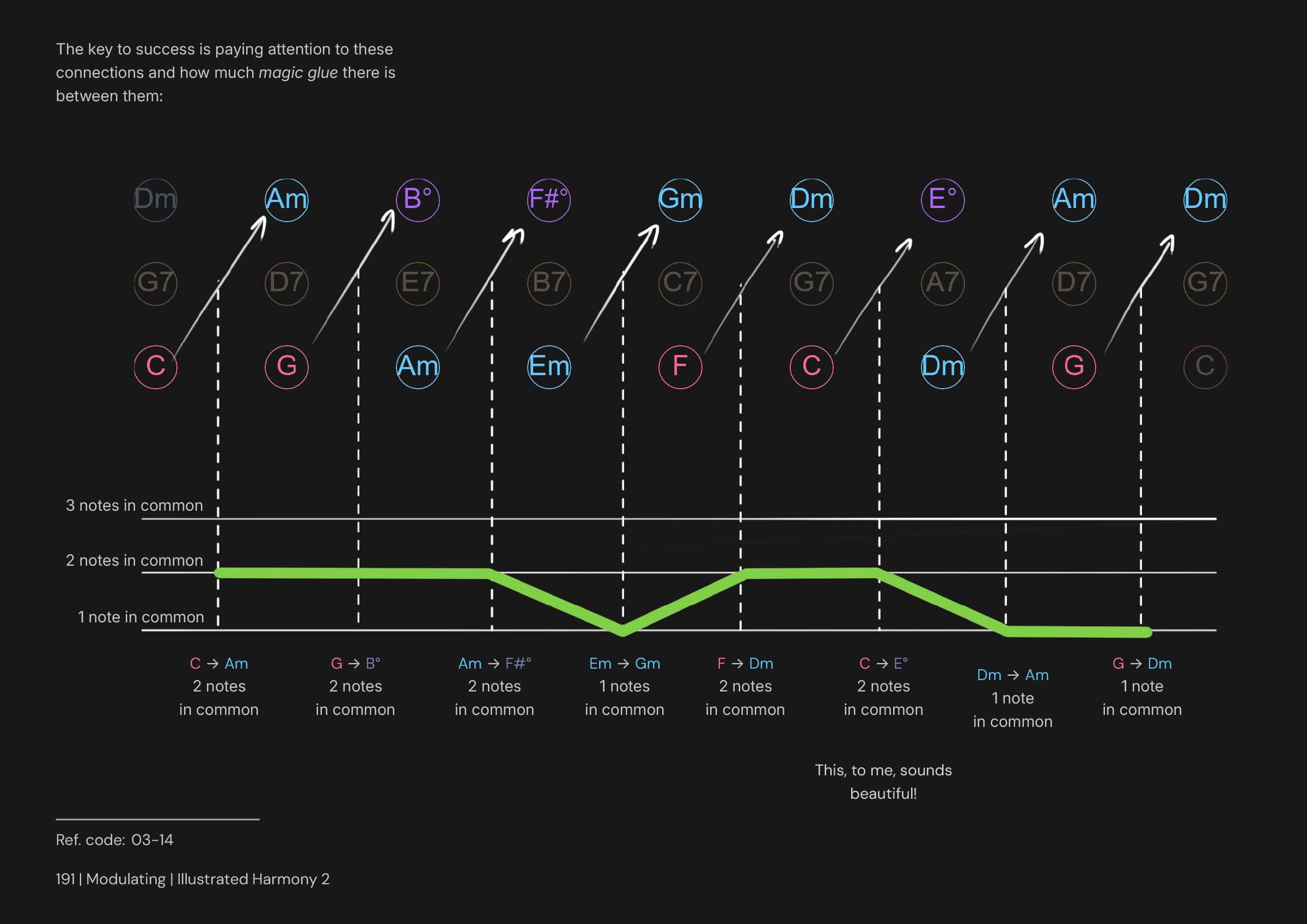
Armonía Ilustrada 2 expands the concepts introduced in Armonía Ilustrada and brings them a chilling—yet fascinating—depth. It has more pages than its predecessor and does not repeat content. It presents new drawings, mandalas, theories, and chord combinations that invite you to explore composition from a visual, playful, and experimental approach. Through play and inquiry, the reader will discover the infinite possibilities that harmony offers when it is understood intuitively. It does not include sheet music; only chord symbols and detailed explanations to support the learning process. If you enjoyed Armonía Ilustrada 1 and want to keep expanding your sonic universe, this book is for you.
Fourth Book
209 pages
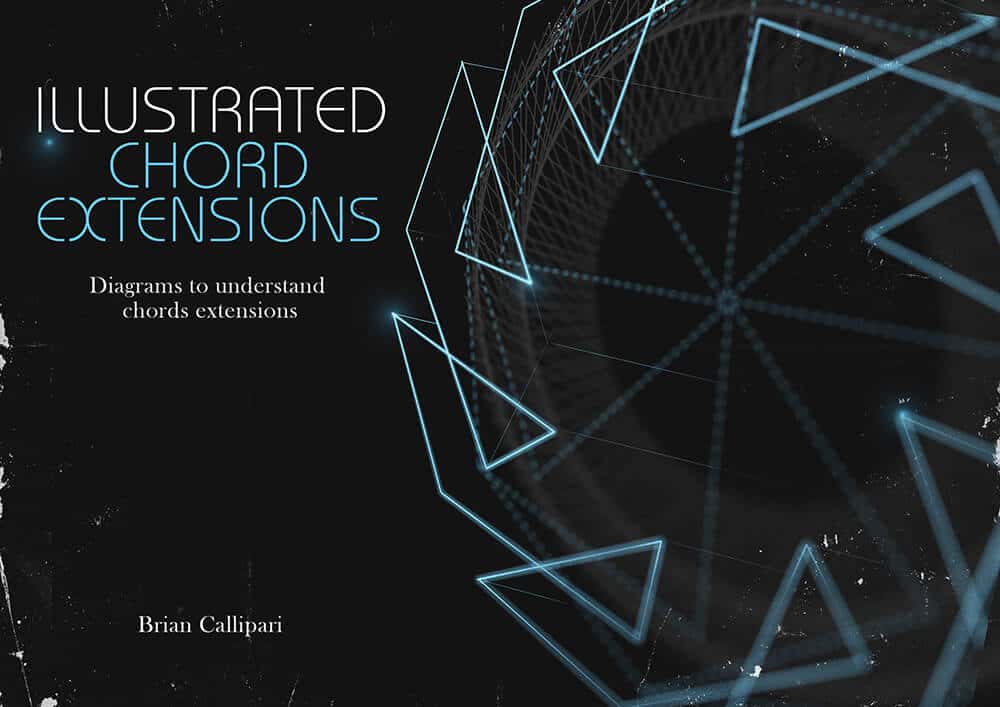
Visual, intuitive graphics to understand 9ths, 11ths, and 13ths—and to discover new colors in every chord.
Fifth Book
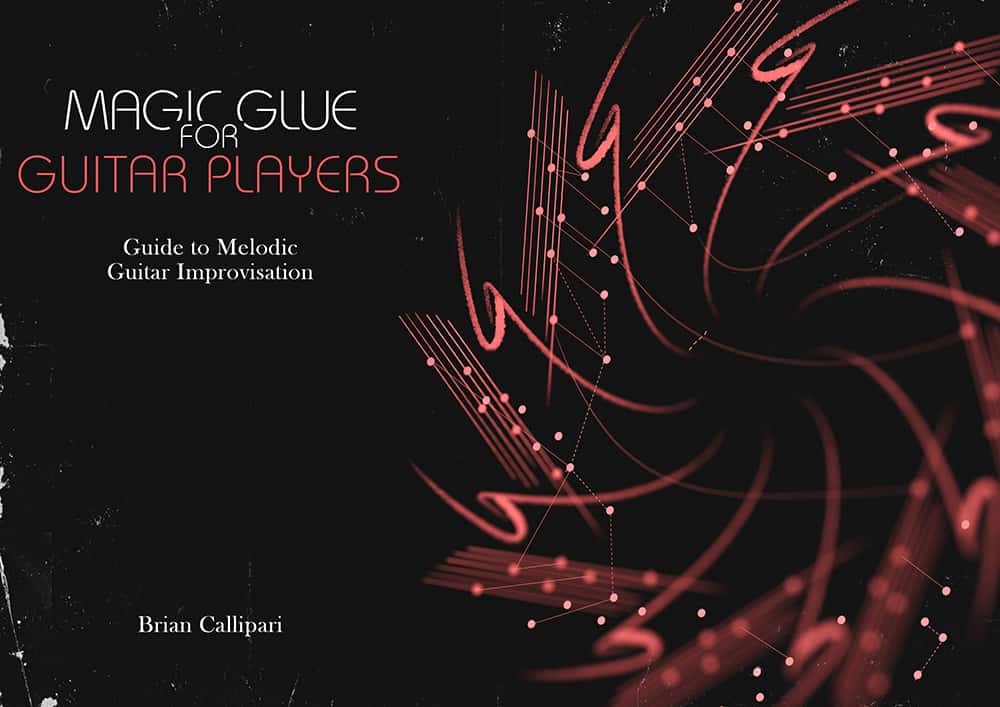
Magic Glue for Guitar Players is a guide to improvising on the guitar built around a simple idea: having a solid framework that always works, regardless of the inspiration of the day. The focus is on targeting notes that consistently sound good and using them as support so each guitarist can add their own voice. There is no standard notation and very little tablature; instead, the book relies on many chord diagrams and highly visual graphics that connect ideas in innovative ways. It is also ideal for applying on the guitar the concepts presented in Illustrated Harmony and Illustrated Modes. The goal is to understand key concepts that can later be applied to any genre, rhythm, or sound. Ideal for Jazz, Blues, Swing, Gypsy Jazz, Surf, 80s Rock, and Heavy Metal. It includes example videos and interactive web applications.