


Along with the books, there are interactive applications that not only help create music, but understand it.

Chord Superstructures
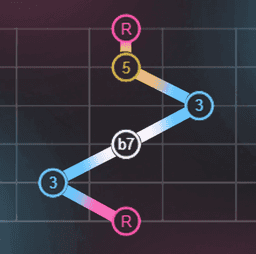
Whole Guitar

Piano Roll PNG
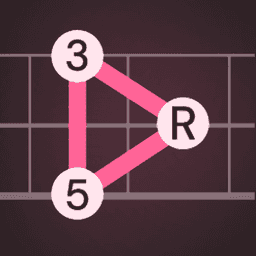
Triads 123
And they are constantly being updated :)


All books include example videos to listen to and bring the explanations to life.
No sheet music:Everything is explained visually with diagrams, arrows, and colors.
Permanent access + updates:Buy once and receive all future versions.
Self-explanatory diagrams:The graphics speak for themselves, but each one includes a written explanation.
What you'll find
✓
The guitar player's two problems
On the fretboard the notes are invisible, and the pentatonic gets used and abused. My way out: whatever chord is playing, build the solo with the notes of that chord.
✓
A single chord: C major
With a C chord in the background, I show you the triad on the first three strings with three shapes: triangle, hook, and wing. Then I add chromatic notes, neighbor tones and, one at a time, the 2nd, the 4th, the 6th, and the sevenths.
✓
Minor, diminished, augmented, and dominant
Changing one note at a time, I go from the major triad to the minor, the diminished, the augmented, the dominant, and the sus2 and sus4. Out of that come the whole-half scale and the whole-tone scale.
✓
Two chords: thinking through the changes
With two chords in a loop, the important part shows up: connecting the positions, finding the common note, and moving each note to the closest one. I suggest the 5 → 1, two dominants in a row, and tritone substitutes.
✓
Simple and complex mandalas
I take everything to long progressions: the circle of fifths and the circle of fourths, the seven chords of a key, passages with diminished, augmented, and suspended chords, and the minor 2 → 5 → 1, ending each phrase on the chord's characteristic note.
✓
Freedom: improvising over a single note
The closing chapter, Freedom, takes away the background chord and leaves a single note: there you can play any chord or scale that contains it. The whole book is in fretboard diagrams, with no sheet music and very little tablature.
Book details
- Author
- Brian Callipari
- Format
- PDF (digital book)
- Pages
- 180
- Languages
- Spanish, English, Portuguese, French, Italian, German, Turkish, and Japanese
- Who it's for
- It's for you if you play guitar at an intermediate level and feel you never get out of the pentatonic; you need to be able to play major, minor, diminished, and augmented chords.
What musicians are saying
Hey Brian, just wanted to reach out. I studied music composition at Berklee and I genuinely wish I had your books back then. Not because my professors were bad, but because your visual approach would have cut my learning curve in HALF. Picked up Tensions Illustrated last week and it's brilliant. The way you map out tensions over chord types is something I haven't seen anyone else do this clearly. Respect man.
Brian I have to be honest with you. I almost didn't buy your books because I've wasted SO much money on music theory courses and books that promised everything and delivered nothing. Bought Harmony Illustrated on a whim and I literally sat there with my mouth open. After 20+ years of playing guitar I finally see the bigger picture. This is not an exaggeration. You cracked the code man
THE COLORS. Thats what gets me. The way you use color to show relationships between notes and chords... my brain just GETS it now. Bought all of them btw 😅
Bro I showed your Harmony Illustrated to my guitar teacher and he literally ordered a copy for himself on the spot 😂 said he wished he had something like this when he was studying. Thats the best review I can give you honestly
Frequently asked questions
Stay in the loop
Leave me your email and I'll let you know about anything new in the collection.
Sign up and I'll send you the book sample (12 pages), plus emails with news and discounts. You can unsubscribe whenever you want.