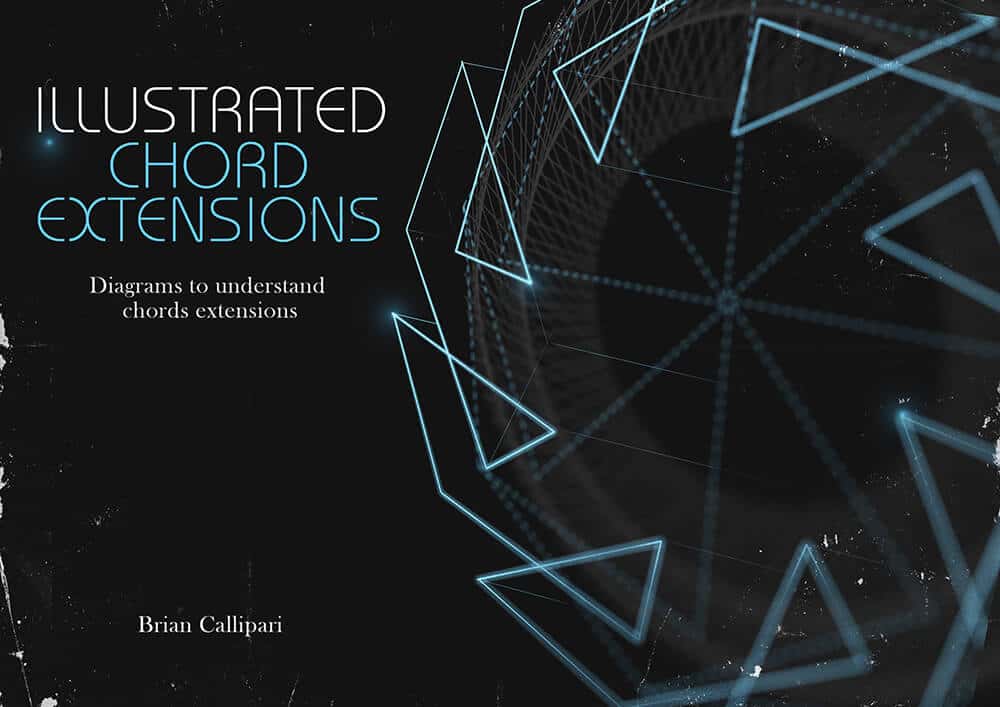
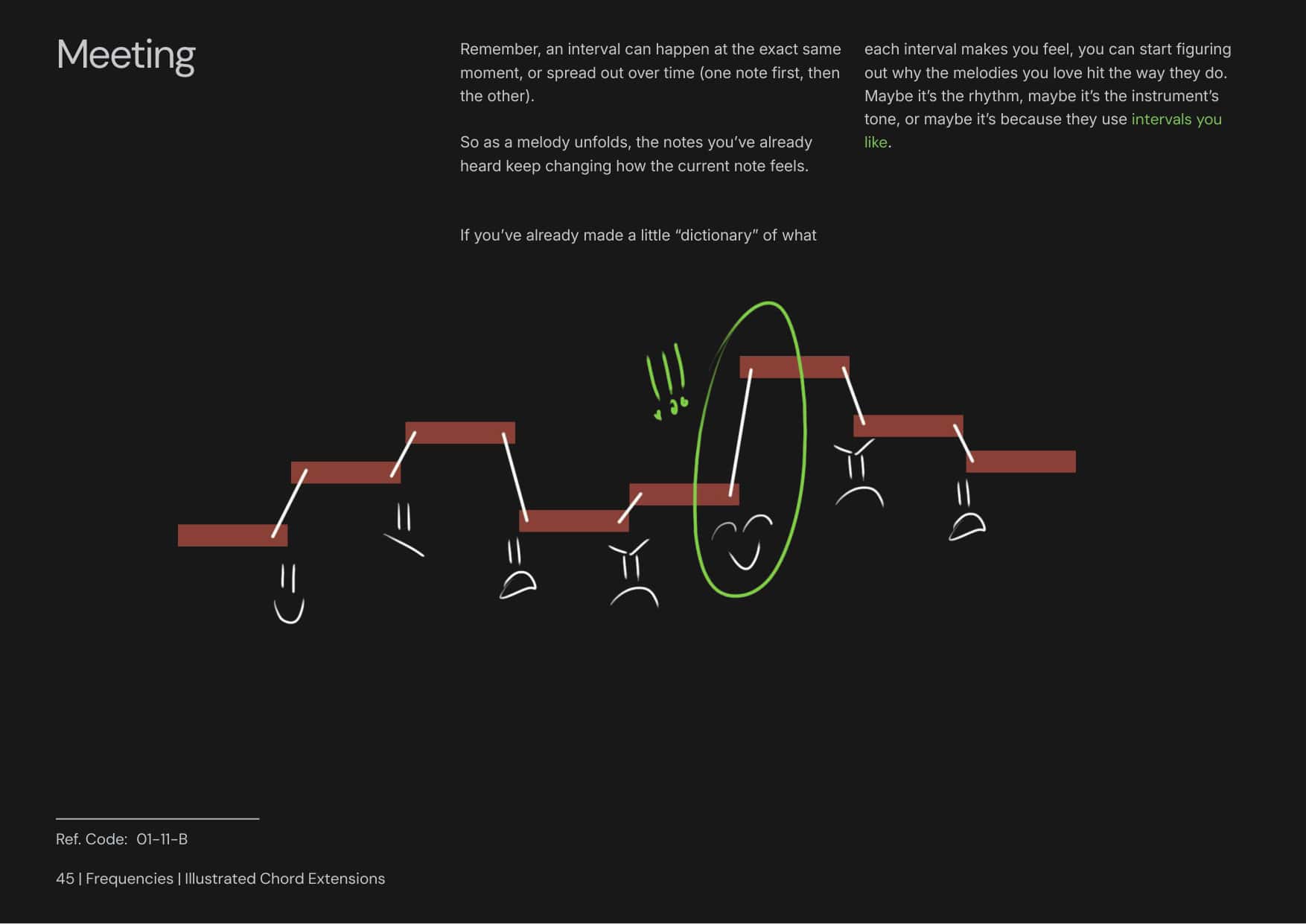
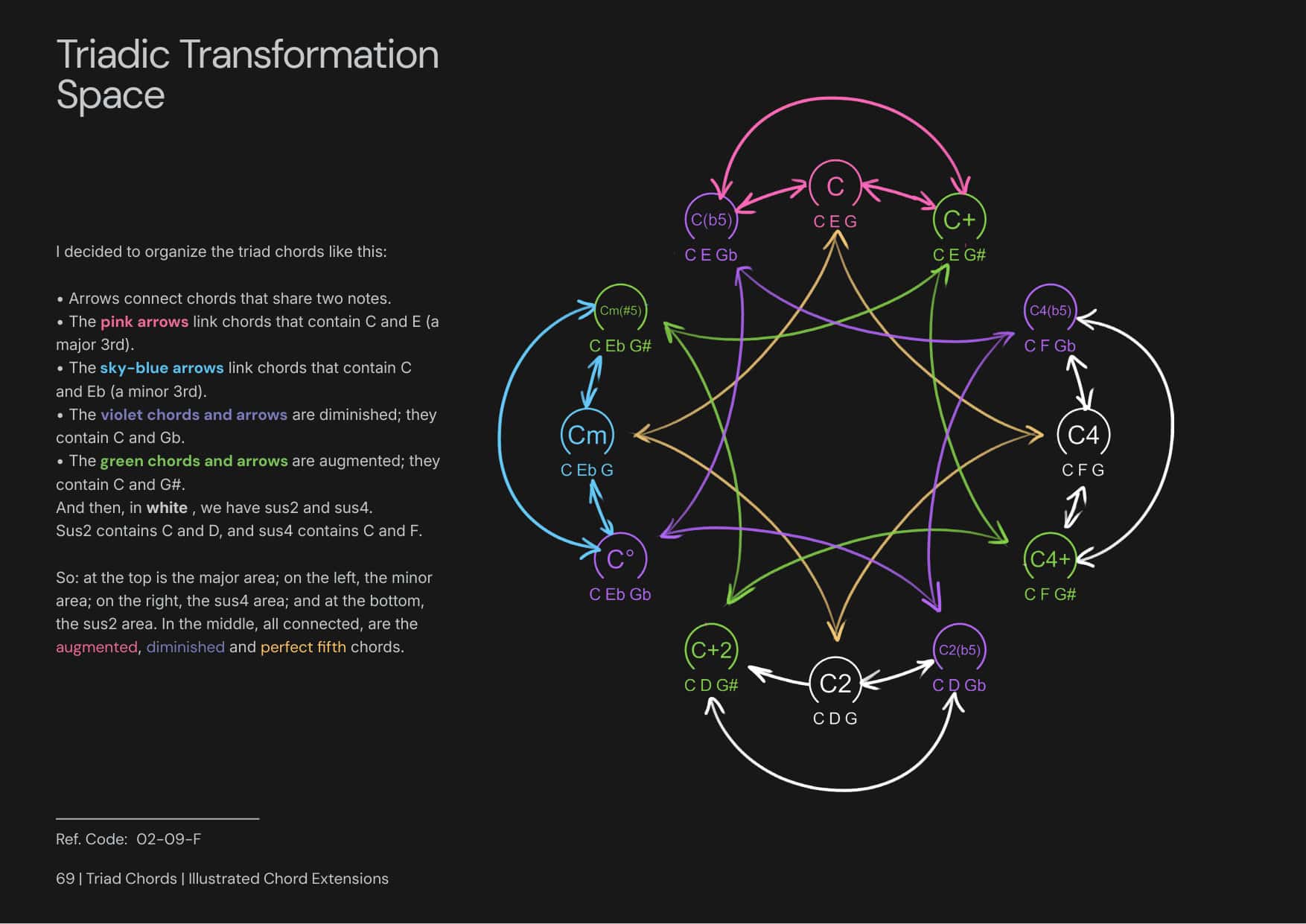
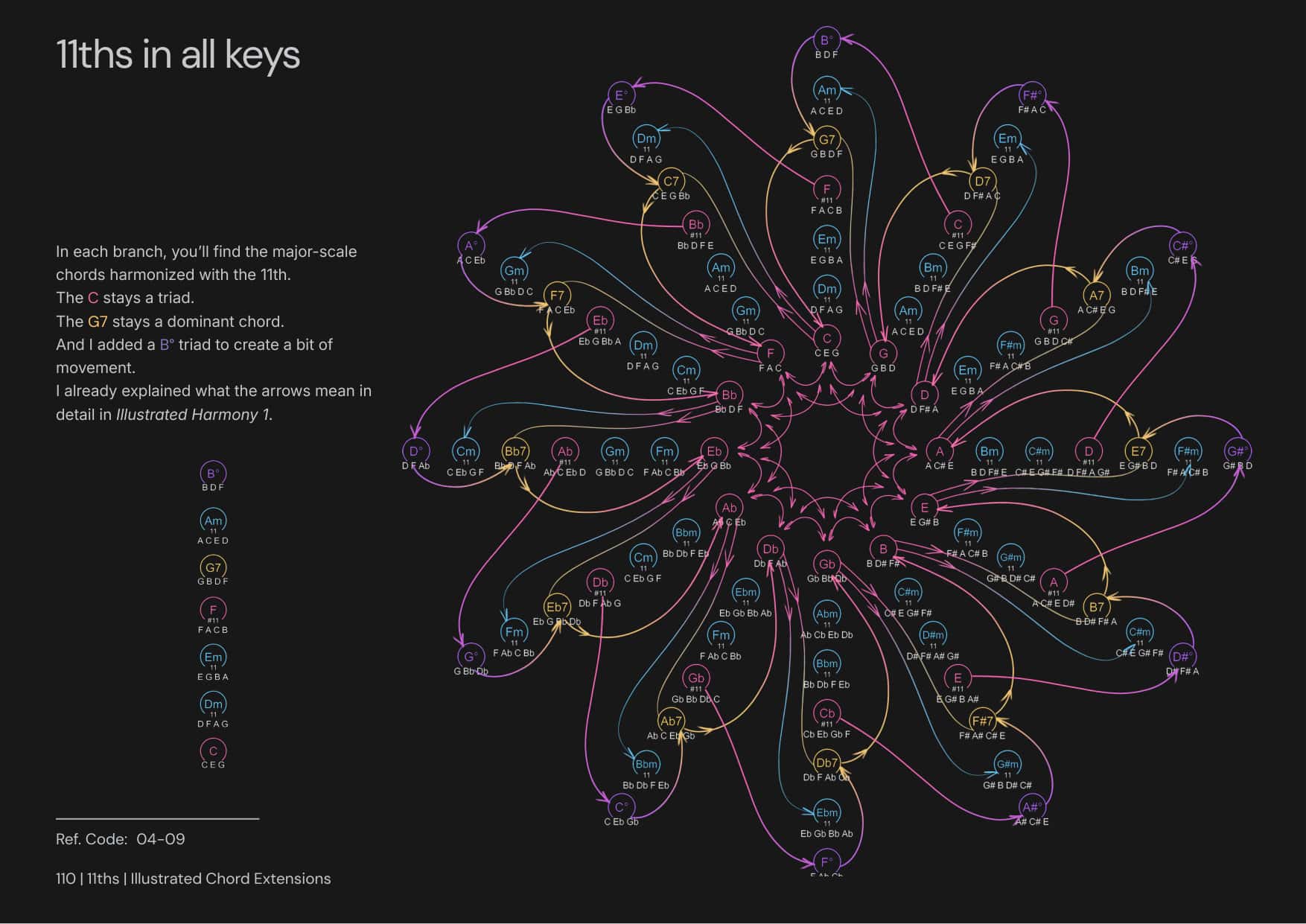
Along with the books, there are interactive applications that not only help create music, but understand it.
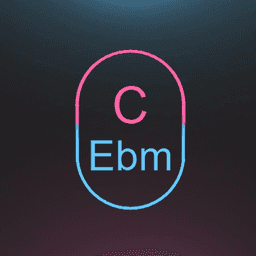
Polychords
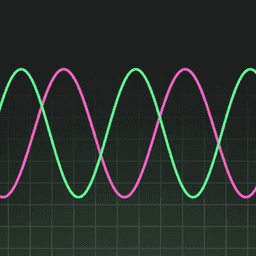
Frequency Visualizer

Interval Visualizer
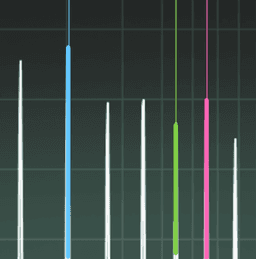
Harmonics Visualizer
And they are constantly being updated :)
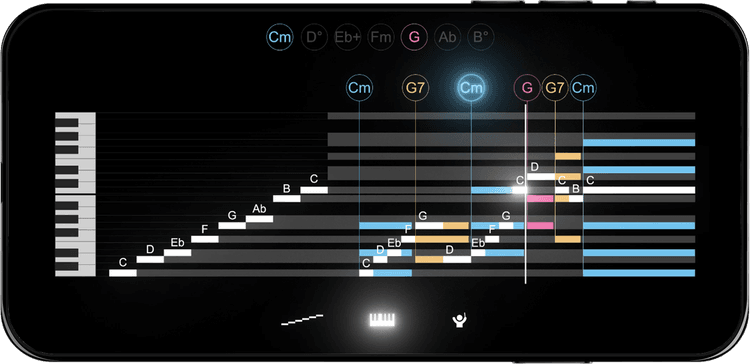
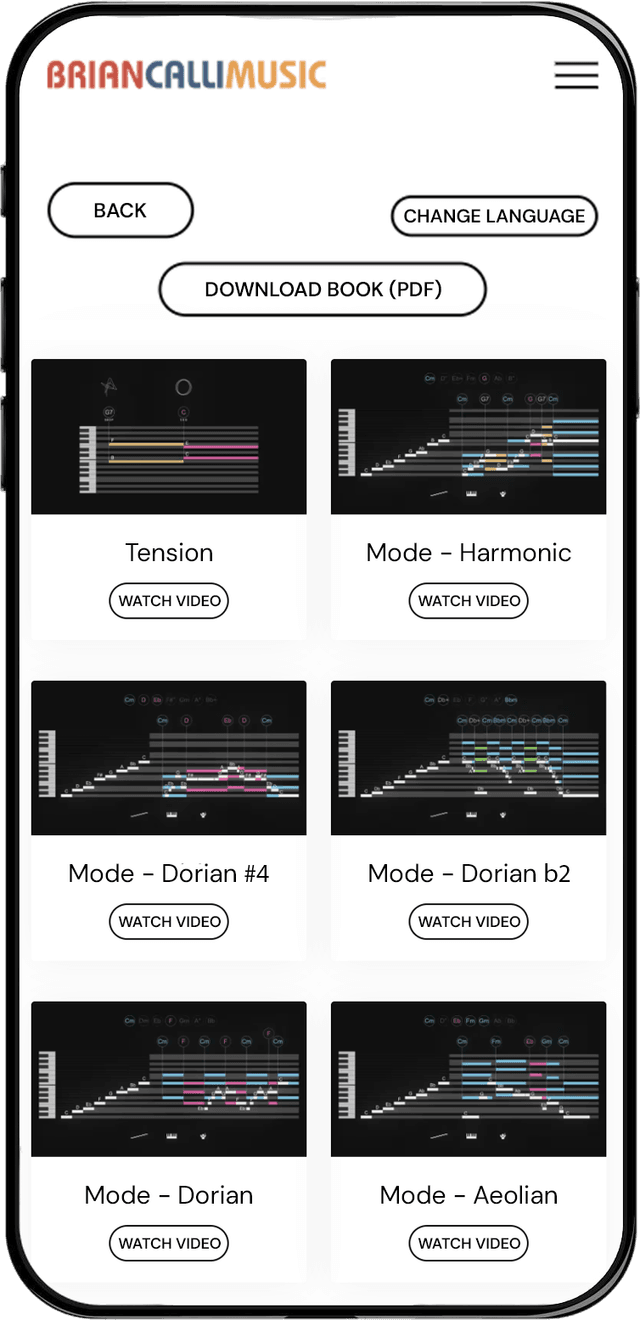
All books include example videos to listen to and bring the explanations to life.
For all instruments:Harmonic and melodic. Not just for guitar or piano.
No sheet music:Everything is explained visually with diagrams, arrows, and colors.
Permanent access + updates:Buy once and receive all future versions.
Self-explanatory diagrams:The graphics speak for themselves, but each one includes a written explanation.
What you'll find
✓
Chord symbols and the names of the tensions
I start with the language: why the 2nd is also the 9th, the 4th the 11th, and the 6th the 13th, and chord symbols with add that let you choose which tensions each chord carries. All in chord symbols, no sheet music.
✓
Frequencies, intervals, and harmonics
I show you what two notes look like sounding together, build a ranking of intervals from least to most tension, and explain harmonics: the 9th and the 11th already sound inside a single note.
✓
Triads as the foundation
Before adding notes, I go over triads: the difference between tension and extension, all the combinations of root, third, and fifth, and which ones sound more or less stable.
✓
9ths, 11ths, and 13ths
One by one over the chords of the major scale: which ones are diatonic, which ones aren't available, and how to rescue some with sharps or flats, like the #11 on the fourth degree. Then I combine them and show you which modes to play over each chord.
✓
Polychords and hybrid chords
A complicated chord symbol is often two triads at once: that's a polychord. I show you how to write them, which ones there are in the major scale, and how they differ from a hybrid chord, an inversion, and a line cliché.
✓
Glue Tensions and Happy Birthday
The method I find most intuitive for adding tensions: taking notes from the chord that's coming, or from its dominant, and putting them in the current chord while minding the voice leading. I close with several versions of Happy Birthday, each with more complex harmonies.
Book details
- Author
- Brian Callipari
- Format
- PDF (digital book)
- Pages
- 209
- Languages
- Spanish, English, Portuguese, French, Italian, German, Turkish, and Japanese
- Who it's for
- It's for taking your first steps with tensions: you need to know how to play major, minor, diminished, augmented, and dominant chords, and what an interval is.
What musicians are saying
Hey Brian, just wanted to reach out. I studied music composition at Berklee and I genuinely wish I had your books back then. Not because my professors were bad, but because your visual approach would have cut my learning curve in HALF. Picked up Tensions Illustrated last week and it's brilliant. The way you map out tensions over chord types is something I haven't seen anyone else do this clearly. Respect man.
Brian I have to be honest with you. I almost didn't buy your books because I've wasted SO much money on music theory courses and books that promised everything and delivered nothing. Bought Harmony Illustrated on a whim and I literally sat there with my mouth open. After 20+ years of playing guitar I finally see the bigger picture. This is not an exaggeration. You cracked the code man
THE COLORS. Thats what gets me. The way you use color to show relationships between notes and chords... my brain just GETS it now. Bought all of them btw 😅
Bro I showed your Harmony Illustrated to my guitar teacher and he literally ordered a copy for himself on the spot 😂 said he wished he had something like this when he was studying. Thats the best review I can give you honestly
Frequently asked questions
Stay in the loop
Leave me your email and I'll let you know about anything new in the collection.
Sign up and I'll send you the book sample (12 pages), plus emails with news and discounts. You can unsubscribe whenever you want.